

certified Helix dealer in Northwest Arkansas
How to Design a Living Room Around a Sectional
A sectional sofa is one of those purchases that gives a room a complete makeover. Not just in how it looks, but in how the space functions day-to-day. It anchors the room, sets the flow of traffic, and quietly determines where everyone sits during movie nights, lazy Sunday mornings, and everything in between.
The challenge most people run into is not choosing the sectional. It is figuring out what to do with the rest of the room once it arrives. Get that part right, and your living room becomes one of the most comfortable, pulled-together spaces in your home.
Here is how to do it right.
Start With the Room, Not the Sofa
This sounds obvious, but most people do it backward. They fall in love with a sectional first and then try to make the room work around it. That approach leads to sectionals that block doorways, overwhelm small spaces, or leave awkward dead zones on one side of the room.
Before anything else, measure your living room carefully. Note the locations of the doors, windows, and vents. Think about how people naturally move through the space. In open-concept homes, which are common in newer builds across Northwest Arkansas, the sectional often has to do double duty, defining the living area while keeping sightlines open to the kitchen or dining space.
How to design a living room around a sectional starts with knowing your square footage and working with it, not against it.
Once you have your measurements, sketch a rough layout. You do not need to be precise. You just need a sense of proportion before you commit.
Choose the Right Sectional Configuration
Not all sectionals are shaped the same, and the configuration you choose affects everything downstream.
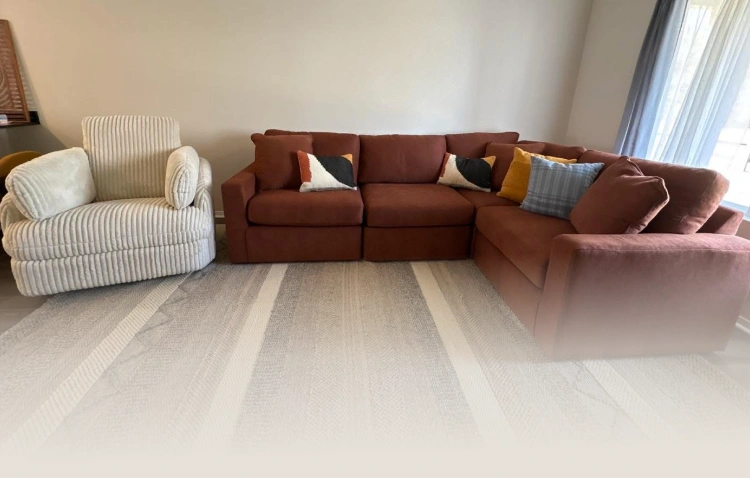
- L-shaped sectionals work well in square or rectangular rooms. They tuck neatly into corners, leaving the rest of the room open for other furniture.
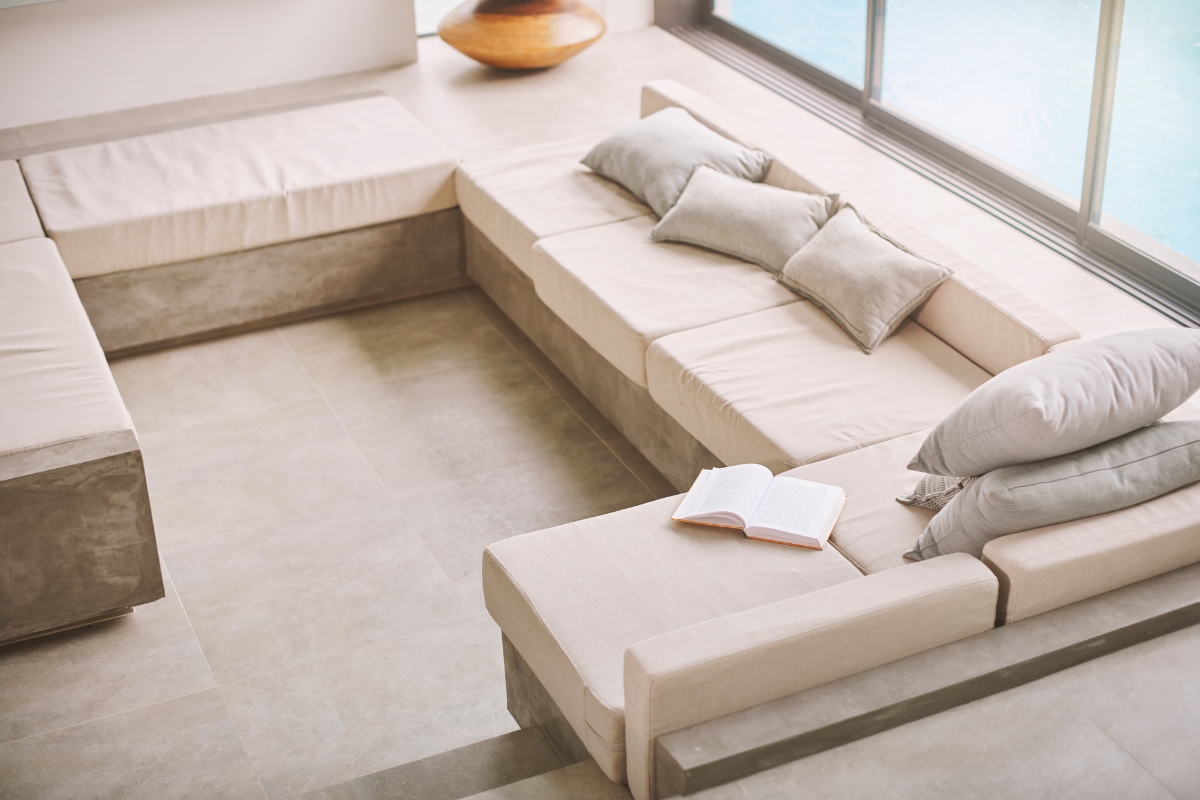
- U-shaped sectionals are better suited to larger rooms where you want to create a defined conversation area. They work especially well in open-plan spaces where you need something substantial to anchor the zone.
- Chaise sectionals offer the comfort of a sectional without the full footprint, making them a strong option for smaller living rooms or apartments.
Think about where the chaise or open end should face. In most rooms, pointing it toward the TV or a focal point like a fireplace makes the most sense functionally.
Anchor It With a Rug
A sectional without a rug can feel like it is floating. A rug grounds the seating area and signals to the eye that this is the heart of the room.
The most common mistake here is going too small. Your rug should be large enough that at least the front legs of the sectional sit on it. Ideally, the entire seating arrangement lives within the rug’s boundaries. In a standard living room, that usually means going bigger than feels comfortable at first.
In terms of texture and pattern, consider what the sectional itself brings to the room. A solid, neutral sectional pairs well with a patterned or textured rug. A bolder sectional fabric calls for something more understated underneath.
Balance the Room With Supporting Furniture
A sectional takes up a lot of visual weight. The rest of your furniture needs to balance that without competing with it.
A few principles that hold up well in practice:
- Keep the coffee table proportional. A small table gets lost in front of a large sectional. Look for something that spans roughly two-thirds of the sofa’s length.
- Add one or two accent chairs. They complete the seating arrangement, giving the room a layered, finished look without crowding the space.
- Be selective with storage pieces. A large entertainment unit or bookshelf can work beautifully opposite a sectional, but only if the room has enough breathing room between them.
Work With the Light, Not Against It
Natural light changes how a room feels at different times of day, and it affects how your sectional’s fabric reads in the space. Darker fabrics absorb light and can make a room feel heavier. Lighter fabrics reflect it and keep the space feeling airy.
If your living room gets strong afternoon sun, think carefully about fabric durability and fade resistance, especially for rooms facing west. Northwest Arkansas summers bring long stretches of direct sunlight, and some fabrics hold up better than others over time.
Layer your artificial lighting too. A floor lamp beside the open end of the sectional adds warmth and makes the corner usable for reading. Overhead lighting alone rarely does a living room justice.
Pull It Together With Accessories
Once the furniture is in place, accessories do the fine-tuning. Throw pillows, blankets, and a few carefully chosen decorative pieces bring personality into the room without adding clutter.
Stick to a cohesive color palette rather than matching everything exactly. Cohesion looks lived-in and intentional.
A couple of plants, a tray on the coffee table, and a piece of wall art above or beside the sectional are usually all it takes to make the room feel complete.
The Right Sectional Makes All the Difference
Designing around a sectional is straightforward once you treat the sofa as the room’s foundation rather than an afterthought. Get the layout right, choose supporting pieces that complement rather than compete, and let the room breathe.
If you are still looking for the right sectional to build around, stop by the showroom and take your time. Most pieces are in stock, so you can see exactly how they look and feel before making a decision. No pressure, no rush — just a comfortable space to figure out what works for your home.