

certified Helix dealer in Northwest Arkansas
How to Choose the Right Sectional for Your Living Room Layout
There is something deeply satisfying about a living room where the furniture fits the space, the seating feels generous, and everything just makes sense the moment you walk in. For many homes, a sectional sofa is the piece that pulls it all together. But choosing one is where many first-time buyers get stuck.
The sheer number of options is overwhelming. L-shapes, U-shapes, chaises, modular configurations, fabric choices, leg heights — it feels like a lot. And buying the wrong one is a costly mistake, both financially and aesthetically.
This guide cuts through the noise. By the time you finish reading, you will know exactly what to look for, what to measure, and what questions to ask before you buy.
Start with Your Room, Not the Sofa
The biggest mistake first-time sectional buyers make is falling in love with a piece before measuring their space. A sectional that looks compact in a showroom can completely swallow a smaller living room. On the flip side, an undersized sectional in a large, open-plan space can feel like furniture floating in a void.
Before you browse a single living room sectional size guide, pull out a tape measure and note these three things:
- The total square footage of your living room
- The wall lengths available for furniture placement
- The distance from any doorways, hallways, or traffic paths
A good rule of thumb: leave at least 18 inches between your sectional and any coffee table, and no less than 30 to 36 inches for walking paths around the room. If your living room is under 250 square feet, a two-piece sectional with a chaise is usually the smarter call over a full U-shape.
Once you know your numbers, the browsing process becomes much more focused and far less frustrating.
Understanding Sectional Configurations
Not all sectionals are built the same way, and the configuration you choose shapes how your room feels on a daily basis.
L-Shape Sectionals
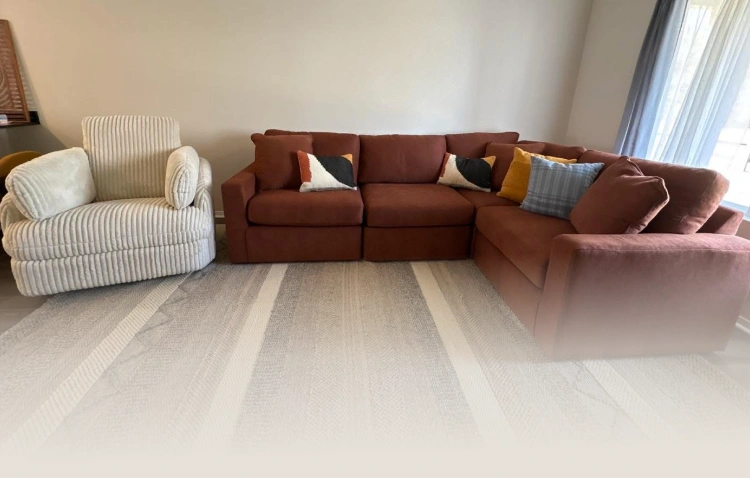
This is the most popular configuration for good reason. An L-shaped sectional fits naturally into a corner, defines the seating area without dominating it, and works well in both smaller and mid-sized living rooms. It is a flexible choice if you are renting or plan to move — it adapts to more room layouts than any other style.
U-Shape Sectionals
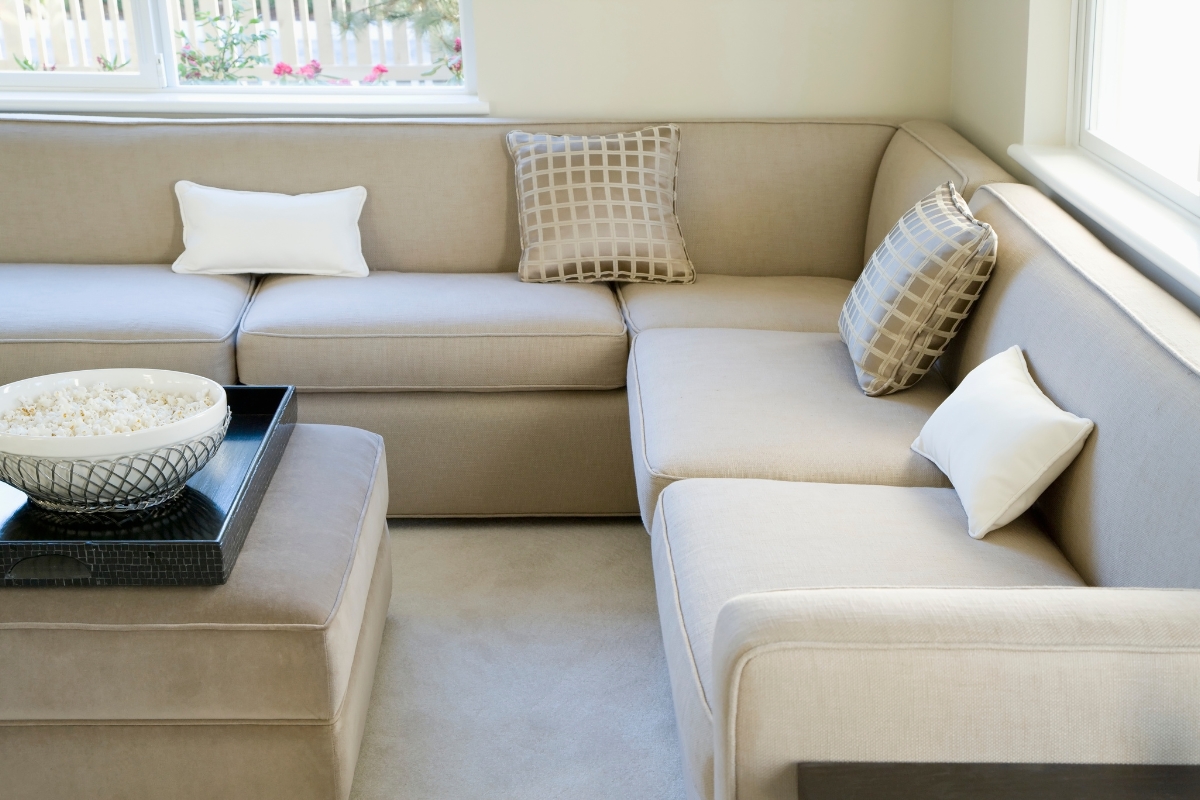
If your living room is large and you want it to feel warm and gathered — think family movie nights, hosting friends, or simply having enough room for everyone — a U-shape delivers. It wraps around a central coffee table, creating an almost room-within-a-room effect. Just make sure your space can genuinely accommodate it. A U-shape typically needs at least 14 feet of width to breathe properly.
Modular Sectionals
Modular sectionals are made up of individual pieces that connect in different ways. They are ideal for buyers who want flexibility over time — you can reconfigure them as your needs or your space changes. They tend to cost a little more upfront, but the versatility makes them a genuinely smart long-term investment for a first home.
Chaise Sectionals
A sectional with a chaise gives you that luxurious, stretched-out feeling without committing to a full L-shape. They work beautifully in narrower rooms where a full corner configuration would feel too heavy.
Choosing the Right Fabric for Real Life
The look of a sectional matters, but how it holds up over time matters more — especially for first-time buyers setting up a home they plan to actually live in.
If you have pets or children, performance fabrics like microfiber, polyester blends, or tightly woven textiles are worth the investment. They resist staining far better than loose-weave options and are easier to clean without professional help. According to the American Home Furnishings Alliance, fabric durability is consistently ranked the top regret factor among furniture buyers who prioritize aesthetics over practicality.
Leather and faux leather are excellent for easy cleaning, though they can feel less inviting in cooler climates and may not suit every design aesthetic.
Neutral tones — warm grays, beiges, and soft creams — tend to give you more design flexibility as your room evolves. If you want a bolder color, consider using throw pillows and blankets rather than the sofa itself. That way, your palette can change without requiring a new piece of furniture.
Think About How You Use the Space
A sectional is not just a sofa. For many households, it is the centerpiece of daily life. Think honestly about how your living room gets used before you settle on a style.
- Do you entertain regularly and need seating for six or more people?
- Do you work from home and occasionally use the sofa as a secondary workspace?
- Is this primarily a relaxation space where deep, cushioned seating matters most?
- Do you watch a lot of TV? If so, does the layout put everyone at a comfortable viewing angle?
These questions are not small. They determine whether a deep-seated, plush sectional serves you better than a firmer, more upright design — and whether a left-facing or right-facing chaise works with your room’s natural flow toward the television or focal point.
A Few Things to Double-Check Before You Buy
- Delivery dimensions: Measure your doorways, hallways, and stairwells. A sectional that cannot fit through your front door is a problem no one wants to deal with on delivery day.
- Leg height: Higher legs tend to make a room feel more open and airy. Lower, platform-style legs give a more modern, grounded look.
- Cushion fill: Foam-and-down blends offer a softer feel but require regular fluffing. High-density foam holds its shape longer with minimal maintenance.
- Frame construction: Hardwood frames outlast particleboard significantly. If a price feels too good to be true, the frame construction is usually where corners were cut.
A sectional is one of the most personal purchases you will make for your home. Take your time, trust your measurements, and choose something that fits the life you are actually living — not just the one you see in a catalog.
When you are ready to see your options in person, browse sectionals in a range of configurations and fabrics, and take the guesswork out of the process. The right fit is out there, and it is worth finding.