

certified Helix dealer in Northwest Arkansas
Sectional Couch Buying Guide: Everything You Should Know Before You Buy
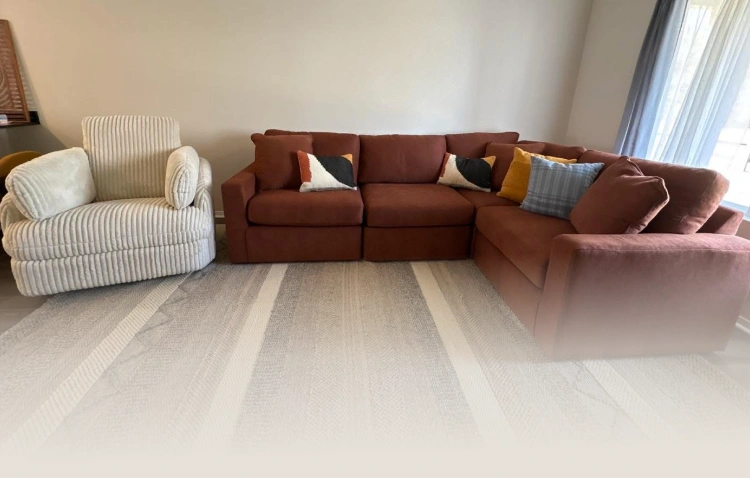
Buying a sectional is not like picking up a throw pillow or a side table. It is one of the largest, most-used pieces of furniture in your home, and getting it wrong is expensive, heavy, and deeply inconvenient to fix. Yet most people walk into a showroom without a plan, fall for the first thing that looks good, and end up with a sofa that fights their room instead of completing it.
This guide exists to change that. Whether you are furnishing your first apartment, upgrading a family room, or finally replacing a couch that has seen better days, what follows will walk you through every real decision you need to make — before you spend a single dollar.
Why Sectionals Deserve More Research Than Other Furniture
Most furniture mistakes are easy to fix. A lamp that does not work in a corner gets moved. A coffee table that reads too small gets swapped. But a sectional that is the wrong size, wrong configuration, or wrong fabric for your lifestyle? That is a problem that sits in the middle of your living room, reminding you of the decision every day.
The buyers who feel best about their purchase are almost always the ones who measured their space twice, thought about how they live, and chose comfort alongside aesthetics rather than instead of it.
The good news is that with the right framework, this does not need to be a stressful purchase. It just needs to be a thoughtful one.
Know Your Space Before You Know Your Style
Dimensions are everything. A sectional that photographs beautifully in a staged living room can feel like a furniture traffic jam in a real apartment. Before you browse, grab a tape measure and write down:
- The full length of the walls where you plan to place the sofa
- The distance between the sofa wall and any opposite furniture or focal point (TV, fireplace, window)
- The width of your doorways, hallways, and any tight turns between the entrance and the room
That last point matters more than most buyers realize. Plenty of people have fallen in love with a sectional only to discover on delivery day that it cannot physically get into their home. Modular sectionals — pieces that separate and reassemble — solve this problem elegantly. They are worth considering specifically if you live in an older home, an apartment building, or anywhere with narrow hallways or low ceilings.
As a starting point, plan for at least 18 inches between your sectional and a coffee table, and keep walking paths around the room at least 30 inches wide. In open-plan homes across the Midwest and South, where living rooms tend to be generous, a U-shaped configuration often fits naturally. In tighter urban spaces on the coasts, an L-shaped or chaise sectional usually does the trick without overwhelming the room.
Configurations: Choosing the Shape That Fits Your Life
The shape of your sectional is not just an aesthetic choice. It dictates how people gather, how conversation flows, and how comfortably everyone can see the television or interact across the room.
L-Shape
The most versatile configuration available. It fits into corners efficiently, leaves the rest of the room open, and works in a wide range of square footage. If you are buying your first sectional and are not sure what you need, an L-shape is almost always a safe starting point.
U-Shape
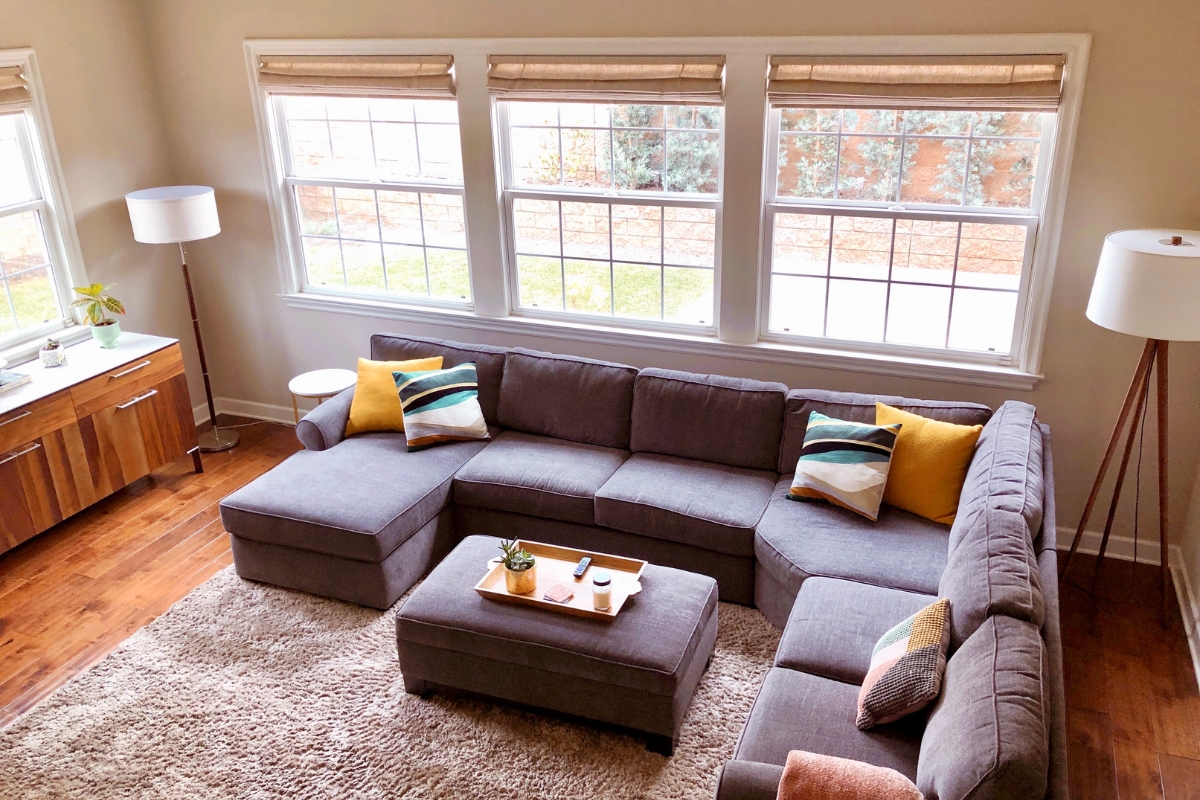
Built for households that genuinely use their living room — families with kids, people who host regularly, and anyone who wants a space that feels full and warm. A U-shape requires more square footage, typically at least 13 to 14 feet in width, but the payoff in comfort and seating capacity is significant.
Chaise Sectional
A sofa with an extended chaise on one end. It gives you that lounging stretch without committing to a full corner configuration. Right-arm or left-arm orientation matters here — always stand facing the sofa and look at which side the chaise falls to confirm it works with your room’s layout.
Modular
Individual pieces that connect in different combinations. They cost more upfront but offer genuine flexibility — you can add a piece, remove one, or reconfigure entirely as your space or household changes. For buyers who move frequently or are still figuring out a layout, modular is worth the investment.
Fabric and Fill: Where Comfort Meets Practicality
How a sectional looks on day one matters far less than how it looks and feels two years in. Fabric and cushion fill are where long-term satisfaction is won or lost.
For households with pets or young children, performance fabrics are the practical choice. Tightly woven polyester blends and microfiber resist staining and hold up to daily use far better than loosely woven textiles or natural linens. According to a survey by the American Home Furnishings Alliance, fabric durability is the most common regret among sofa buyers who prioritized looks over livability.
Leather and faux leather remain popular for their easy-to-clean surfaces, though they can feel cold in winter and warm in summer, depending on your climate. In states like Arkansas, where seasons shift meaningfully, fabric sectionals often feel more comfortable year-round.
For cushion fill, high-density foam retains its shape longer and requires less maintenance than down or feather blends. Down feels luxurious but needs regular fluffing to avoid that sunken, shapeless look over time. A foam core with a down-wrapped layer gives you the best of both — supportive and comfortable without the upkeep.
Frame Quality: The Part You Cannot See
A sectional’s longevity lies in its frame. Kiln-dried hardwood — typically oak, ash, or poplar — is the industry standard for durable furniture. It resists warping and cracking over the years of use. Frames built from particleboard, plastic corner blocks, or with stapled joints will feel fine at first, but will start to loosen and creak within a few years.
Ask about the frame material before you buy. Any reputable furniture retailer should be able to answer that question directly.
Final Checklist Before You Commit
- Measured your room and confirmed the sectional fits with clearance on all sides
- Checked that the delivery can physically reach the room
- Choose a fabric that suits how you actually live, not just how you want the room to look
- Confirmed cushion fill and frame material with the retailer
- Decided on the configuration based on your household’s daily habits
A sectional done right becomes the heart of a home. It is where your mornings start slow, where family gathers without planning to, and where guests end up staying later than anyone expected.
When you are ready to find yours, visit a showroom where you can sit in the options, ask real questions, and take your time. The right sectional is not the most expensive one — it is the one that fits your space, your life, and the way you want your home to feel.